
The Five Most Common Organizing Mistakes You're Probably Making Right Now
Stop sabotaging your space without realizing it.
We've all been there. You watch a satisfying organizing reel, feel a surge of motivation, and dive headfirst into decluttering your closet or kitchen pantry. Armed with bins and labels, you tackle the chaos with gusto, only to find that a few weeks later, it looks suspiciously like... well, chaos again. What gives? Chances are, you're falling prey to one of these sneaky organizing pitfalls that actually work against creating a lasting, functional system. Let's shine a light on these common blunders so you can finally break the cycle.
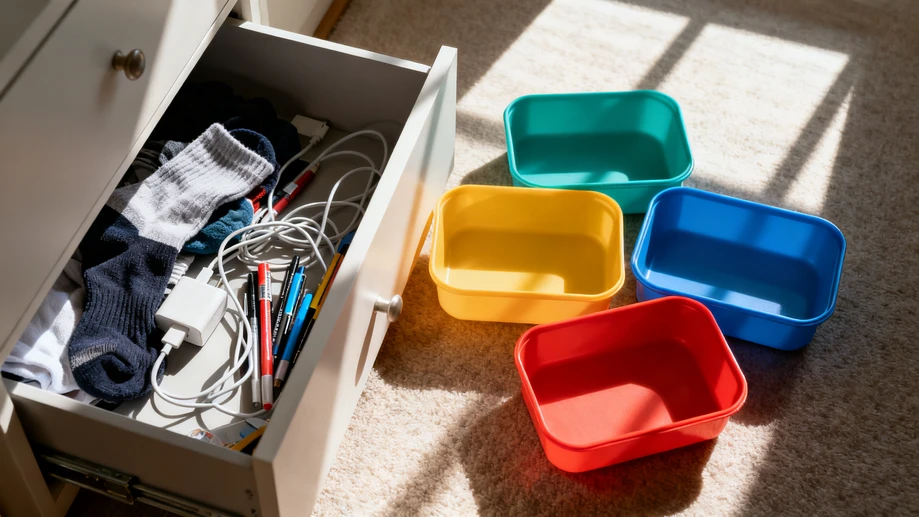
Mistake number one is the siren song of buying storage solutions *before* decluttering. It's incredibly tempting. You see those perfectly stacked clear bins or those chic woven baskets and imagine your space instantly transforming. But purchasing containers first is like trying to build a house without a blueprint. You end up with containers that don't fit your actual items, don't suit the space, or worse, become clutter themselves. Instead, ruthlessly declutter first. Only when you know exactly what you need to store and how much space it requires should you even *think* about shopping for bins. You might be surprised at how much you already own that can be repurposed.
Closely related is the second mistake: over-complicating your systems. We get it. Micro-organizing your spice drawer with individual magnetic jars for every single seed and flake looks amazing in photos. But in real life? If it takes ten minutes to put away the cumin after a rushed Tuesday night dinner, the system is doomed. The best organizing systems are simple, intuitive, and easy to maintain. Group similar items together in broad categories. Use open bins or simple dividers instead of intricate compartmentalization. Ask yourself: "Will I realistically put this back here every single time?" If the answer is no, simplify.
Mistake three is ignoring your natural habits and the flow of your space. Trying to force yourself to adopt a system that fights against your instincts or the room's layout is a recipe for failure. Do you always dump your keys on the kitchen counter the second you walk in? Don't fight it by insisting they go in a hallway drawer. Instead, place a small bowl or hook *right there* on the counter. Does your laundry pile up near the bedroom door? Put a hamper there, not tucked away in the closet corner. Organizing should work *with* you, not against you. Observe your natural routines and build your storage around them.
The fourth pitfall is the pursuit of picture-perfect Instagram organization. That pristine, minimalist aesthetic with everything hidden away in identical, labeled containers? It looks serene, but it might be completely impractical for your daily life. If you need to see your things to remember you have them, open shelving or clear bins are better than opaque ones. If your kids need easy access to toys, complex stacking systems won't work. Prioritize function and accessibility over achieving a flawless look. A slightly lived-in, highly functional space beats a beautiful but unusable one every time. Authenticity trumps aesthetics when it comes to sustainable organization.
Finally, mistake number five is the big one: treating organizing as a one-time project rather than an ongoing habit. You can't just declutter and organize once and expect it to stay that way forever. Life happens. New things come in, priorities shift, and entropy is a real force! The key to maintenance is building tiny habits. Spend five minutes at the end of the day returning things to their designated spots. Do a quick "reset" of a problem area once a week. Schedule a seasonal decluttering session. When you bring something new in, consider letting something else go. Small, consistent actions prevent the need for massive, overwhelming overhauls down the line.
Breaking these habits takes awareness and a shift in mindset. Stop buying bins as a starting point. Embrace simplicity over complexity. Work with your routines, not against them. Choose function over flawless aesthetics. And most importantly, commit to the tiny, daily habits that maintain order. Ditch the all-or-nothing approach. Progress, not perfection, is the real goal. When you stop making these common mistakes, you free up so much mental and physical space. Your home becomes easier to manage, less stressful, and truly supports the life you want to live within it. Now *that's* organization worth striving for.