
Global Homeowners Prioritize Multifunctional Kitchen Islands in Daily Design Updates
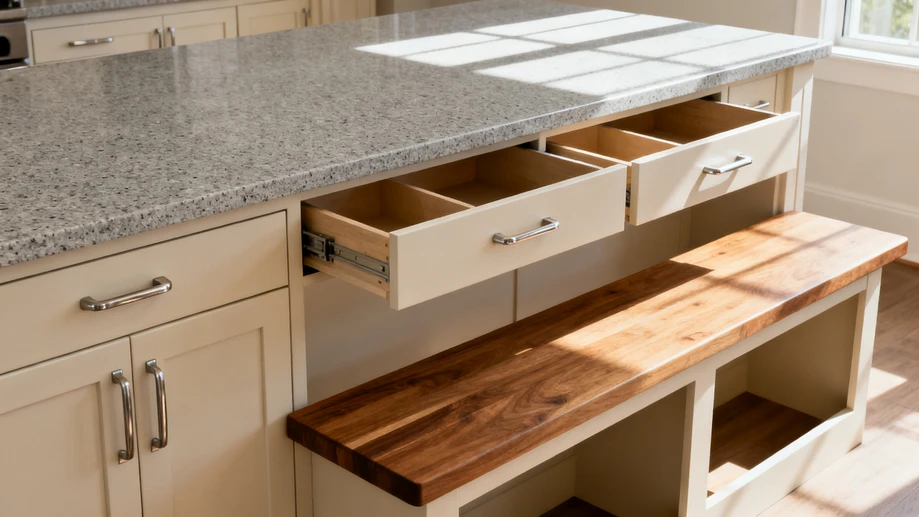
Recent surveys highlight a surge in kitchen islands with built-in storage and seating as the focal point of modern home renovations worldwide.
The world of home renovation is buzzing with fresh shifts, as homeowners increasingly seek spaces that blend practicality with style. In the latest daily trend insights, kitchens have emerged as the epicenter of this transformation, driven by a desire for multifunctional areas that cater to busy lifestyles. Gone are the days when kitchens served merely as cooking zones; today, they double as social hubs and workstations. This evolution reflects broader societal changes, such as the rise of remote work and the emphasis on family gatherings. As a result, design preferences are leaning towards open layouts that foster connectivity, making the kitchen island a star player in global renovations.
Moreover, the appeal of multifunctional islands lies in their versatile design, which seamlessly integrates storage, seating, and prep surfaces. For instance, many new installations feature hidden compartments for utensils, pull-out drawers for appliances, and extended countertops that accommodate dining or homework. This not only maximizes space efficiency but also enhances the aesthetic flow of a home, creating a cohesive look that appeals to modern sensibilities. Homeowners report that such islands reduce clutter and improve daily routines, turning chaotic kitchens into organized sanctuaries. The trend is particularly strong in urban settings, where square footage is limited, yet the demand for stylish, adaptable living remains high.
Interestingly, a small but fascinating tidbit adds depth to this movement: the concept of kitchen islands originated in 18th-century European farmhouses, where they were used as simple work tables for food preparation. Over time, they evolved into decorative elements in Victorian homes before gaining popularity in mid-20th-century American designs. Today, this historical evolution has come full circle, with islands now serving as high-tech command centers that incorporate charging ports and smart surfaces. This historical context underscores how timeless design principles adapt to contemporary needs, offering a nostalgic yet innovative touch to renovations.
However, regional variations add a layer of complexity to this global phenomenon. In Europe, for example, islands often emphasize minimalist aesthetics with sleek materials like quartz or recycled wood, reflecting a cultural preference for understated elegance. Meanwhile, in Asian markets, compact islands with foldable features are gaining traction to suit smaller apartments, while in North America, larger, statement-making islands dominate, often paired with bold colors or natural stone. These differences highlight how local lifestyles and architectural traditions shape universal trends, yet the core drive for functionality remains a unifying thread. As renovation experts note, this adaptability ensures that the island trend resonates across diverse demographics, from young professionals to growing families.
Looking ahead, the momentum shows no signs of slowing, with innovations poised to elevate islands further. Advances in smart home technology, such as voice-activated controls or integrated lighting systems, are being incorporated to enhance user convenience. Yet, challenges like budget constraints or installation complexities must be addressed through creative solutions, such as DIY kits or modular designs. Ultimately, this daily shift underscores a larger narrative: homes are evolving into dynamic spaces that prioritize both form and function. By embracing such trends, homeowners worldwide are not just updating their living environments but redefining what it means to live comfortably and efficiently in the modern era.